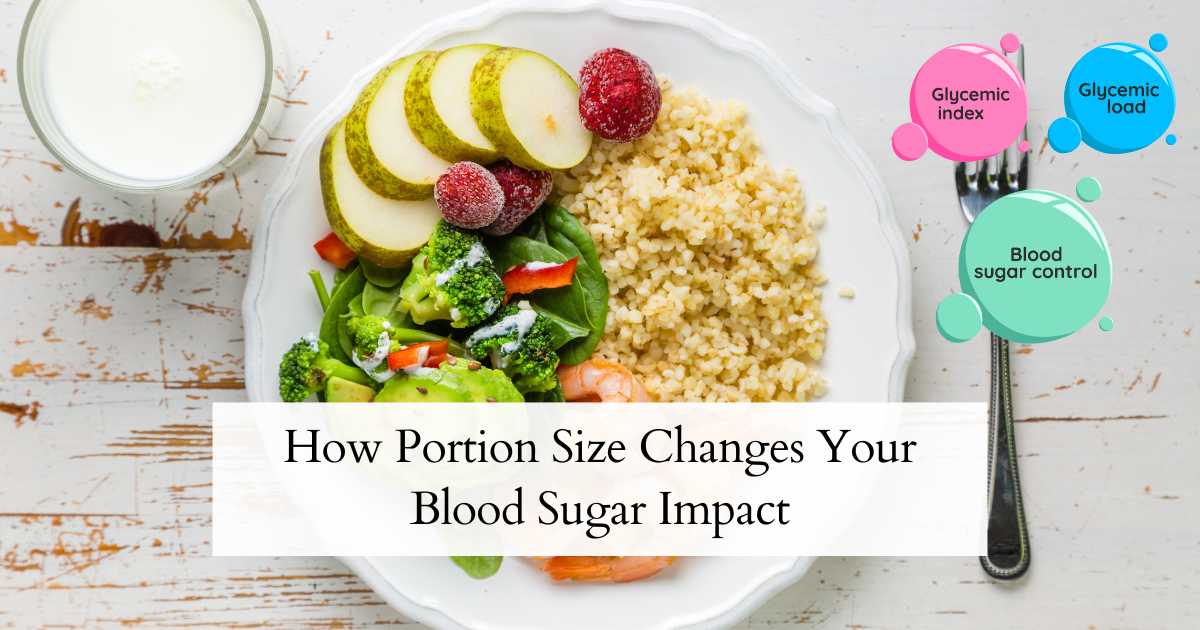
If you’ve ever avoided a slice of watermelon or skipped a small bowl of carrots because someone told you they were “high sugar,” you’re not alone. Many people managing prediabetes or type 2 diabetes rely entirely on the Glycemic Index (GI) to decide what foods are safe to eat.
However, relying on GI alone leaves out half the story: portion size.
Understanding how the amount of food on your plate alters your glucose response is the secret to eating foods you love without triggering unexpected blood sugar spikes. Here is how portion size directly changes your blood sugar impact, and how to measure it accurately.
The Missing Piece: Glycemic Index vs. Glycemic Load
To understand why portion size matters, you have to look at the difference between two key metrics:
- Glycemic Index (GI): Measures how fast a carbohydrate-containing food raises blood glucose levels compared to pure glucose. It scores foods on a scale of 0 to 100 based on a standard test amount (usually 50 grams of available carbs).
- Glycemic Load (GL): Measures how much that specific serving size will actually raise your blood sugar. It takes the Glycemic Index and multiplies it by the amount of carbohydrates in your actual portion.
$$\text{Glycemic Load} = \frac{\text{Glycemic Index} \times \text{Net Carbs (in grams)}}{100}$$
The Watermelon Example
Watermelon has a high Glycemic Index of 72. On paper, it looks like a food that will immediately spike your blood sugar.
However, watermelon is mostly water. To get 50 grams of carbohydrates (the standard GI testing amount), you would need to eat nearly 5 cups of watermelon at once.
If you eat a standard, reasonable serving of 1 cup (about 120 grams):
- Carbs in 1 cup: ~11 grams
- Glycemic Load calculation: $(72 \times 11) / 100 = 7.9$
A GL score of 7.9 is considered low. Despite its high GI, a normal portion of watermelon has a very mild impact on your glucose levels.
How Portion Sizes Shift the Scale
Because Glycemic Load accounts for serving size, changing your portion directly changes your score:
| Food | Serving Size | Net Carbs | GI | Glycemic Load | Impact Level |
| White Rice | $1/2$ cup (cooked) | ~22g | 73 | 16 | Medium |
| White Rice | 1.5 cups (cooked) | ~66g | 73 | 48 | High |
| Oatmeal | $1/2$ cup (dry) | ~27g | 55 | 14 | Medium |
| Oatmeal | $1$ cup (dry) | ~54g | 55 | 29 | High |
Eating three times the portion size yields three times the blood sugar impact, regardless of how healthy the food is considered on paper.
What the GL Numbers Mean
- Low GL: 10 or less (Minimal effect on glucose)
- Medium GL: 11 to 19 (Moderate effect)
- High GL: 20 or more (Likely to cause a sharp glucose spike)
3 Ways to Control Portion Impact Without Skipping Foods
- Pair Carbs with Protein and Fat: Protein, healthy fats, and dietary fiber slow down gastric emptying. This lowers the speed at which carbohydrates are broken down into glucose, flattening the spike.
- Use the Plate Method: Fill half your plate with non-starchy vegetables, one-quarter with lean protein, and one-quarter with complex carbohydrates. This naturally caps your carbohydrate portion size without tedious measuring.
- Check Your Serving Before You Eat: Before cutting out your favorite fruits or grains, calculate their actual load based on the exact amount you plan to consume. You can easily calculate the Glycemic Load of your portion using this Glycemic Load Calculator.
Take Control of Your Meals
Managing blood sugar isn’t about eliminating carbohydrates entirely—it’s about understanding carbohydrate density and controlling serving sizes. Once you know how your portions affect your numbers, you gain the flexibility to enjoy a wider variety of foods with confidence.